Neonatal Examination: A Step-by-Step Guide for Medical Students
How to examine a newborn systematically: build rapport, inspect, work from head to toe, check the reflexes, examine the back and close. A checklist for exams and the ward.

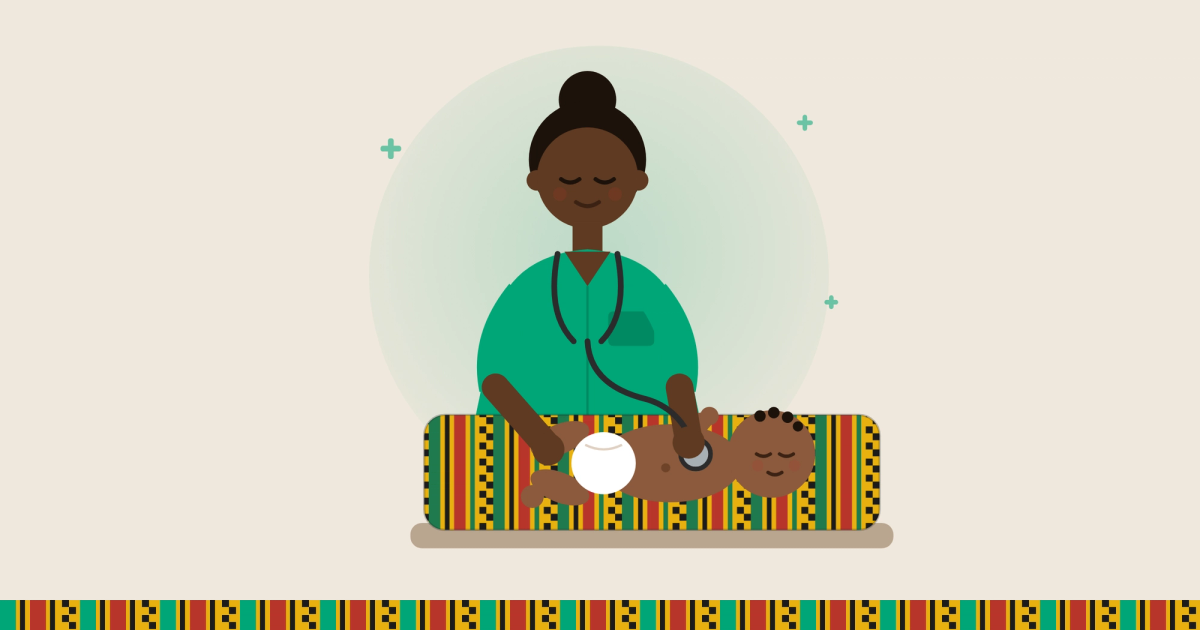
A newborn cannot describe symptoms, so the neonatal examination is how a clinician finds problems that have not yet shown themselves. An ordered routine also makes the examination easier to remember, and easier to mark in an OSCE.
The examination at a glance
- Establish rapport and get permission.
- Prepare the setting.
- Inspect the baby and the surroundings.
- Examine the front of the baby: skin, head, face, neck, chest, abdomen, genitalia, anus, limbs and reflexes.
- Examine the back and the lung zones.
- Close: thank the mother and dress the baby.
Start with rapport and permission
The examination begins before you touch the baby. Work through these five steps every time:
- Greet the caregiver.
- Introduce yourself and your role.
- Ask for the caretaker's name, their relation to the child, and the child's name and age.
- Explain the purpose of the examination.
- Ask for permission.
A short script helps under exam pressure: "Good morning, I am a medical student. May I ask your name, how you are related to the baby, and the baby's name and age? I would like to examine your baby from head to toe to check that they are well. Is that all right with you?"
Prepare the setting
- Exposure: expose the entire body except the diaper.
- Position: supine is preferred, but adapt to the baby's state. A settled baby in the mother's arms is better than a crying baby on the cot.
- Space: stand on the right side of the cot, with enough room to work. Lower the side rail if it is raised.
Inspect the baby and the surroundings
Spend the first moments looking, with your hands still. Many of the most useful signs are visible from the end of the cot.
The baby
- Age group and position or posture: supine in bed, lying in the mother's arms, flexed or extended.
- General state of health: does the baby look well or ill?
- Level of alertness.
- Cry: normal or abnormal.
- Colour: look for cyanosis and for a plethoric (unusually red) appearance.
- Size for gestational age: small for gestational age (SGA) or large for gestational age (LGA).
- Dysmorphic features.
- Breathing: the movement of the chest and abdomen with respiration, and the respiratory rate.
- Signs of respiratory distress: chest retractions or indrawing, laboured breathing and grunting.
The surroundings
The equipment around the baby tells you what care they are already receiving:
- Oxygen delivery: nasal prongs, face mask, Venturi mask, non-rebreather mask or an oxygen tank.
- Lines: a cannula in situ or an IV infusion line.
- Incubator or phototherapy unit.
Examine the skin, head and face
Skin
- Vernix, the white creamy coating many newborns have.
- Birthmarks.
- Milia, or milium cysts: tiny white cysts, often on the face.
Head
Inspection
- Shape and size.
- Swelling, which may be a birth injury.
- Hair: colour, texture, distribution, pluckability and hairline.
Palpation
- Anterior and posterior fontanelles: are they present, and what are their shape, consistency and size? Record the size as the number of fingers admitted.
- Sutural lines: metopic, sagittal, coronal and lambdoidal.
- Head circumference.
Face
Start with the temperature of the forehead, then work from the eyes down.
Eyes
- Number present.
- Hypertelorism (widely spaced eyes) and the slant of the palpebral fissures.
- Jaundice and pallor.
Ears
- Number present.
- Level: normal or low-set.
- Shape: absent antihelix, deep conchal bowl, prominent lobe.
- Ear tag and preauricular sinus.
Nose
- Nasal bridge: normal or flat.
- Patency of the nostrils.
- Flaring of the alae nasi.
- Philtrum: normal or flat.
- Blanching of the tip of the nose, to look for jaundice.
Mouth
- Cleft lip.
- Neonatal tooth.
- Central cyanosis.
- Palate, hard and soft.
- Suckling reflex and rooting reflex.
Examine the neck and chest
Neck
- Any obvious neck mass. If there is one, examine it fully.
- Webbed neck. Check the back of the neck too.
- Clavicular fractures, found on palpation.
Chest
Inspection
- Chest deformity, shape and symmetry.
- Scars and scarification, and visible veins.
- Signs of increased respiratory effort: chest indrawing and retractions (suprasternal, intercostal and subcostal).
- Visible precordial activity.
- Nipples: widely spaced nipples, a darkened areola or a rudimentary nipple.
Palpation
- Breast enlargement and nipple bud.
- Apex beat.
- Heaves and thrills.
Auscultation
- Heart: heart sounds and murmurs.
- Lungs: air entry, breath sounds and added sounds.
Examine the abdomen, genitalia and anus
Abdomen
Inspection
- Obvious deformity.
- Shape: full or distended.
- Scars and scarification, and visible veins.
- The umbilical cord: is it still attached and well clamped? Look for reddening, bleeding, discharge around the base and an offensive smell.
- Obvious bulging, which may be a hernia.
Palpation
- Light palpation for tenderness and masses.
- Organ-specific palpation.
- The hernial orifices.
Auscultation
- Bowel sounds.
Genitalia
State whether the external genitalia are male, female or ambiguous, then:
In a boy
- Circumcised or not, and whether the foreskin retracts.
- Urethral meatus: central, or epispadias or hypospadias.
- Scrotum: rugae, pigmentation and swellings. Are both testes felt in the scrotum? If not, think of an undescended testis.
In a girl
- Clitoris: normal or enlarged.
- Labia: normal or enlarged, fused or not.
- Discharge.
Anus
- Position and patency.
- Visible masses and veins.
- Discharge: blood, stool and so on.
- The contents of the diaper.
Examine the limbs and the reflexes
Lower limbs
- Inguinal lymph nodes.
- Femoral pulses, and any brachio-femoral delay.
- Tone: normal or hypotonia.
- Limb abnormalities, for example clubfoot.
- Feet: creases, and the number of digits. Look for extra digits (polydactyly) and fused digits (syndactyly).
- Plantar reflex.
- Barlow and Ortolani tests.
Upper limbs
- Congenital malformations: polydactyly and syndactyly.
- Capillary refill time.
- Palmar grasp reflex.
- Tone.
Other reflexes
- Asymmetric tonic neck reflex (the "fencing" posture).
- Stepping reflex.
- Moro reflex: is the response complete and symmetrical, incomplete, or asymmetrical?
Examine the back
Turn the baby over, or ask the caregiver to help you.
Inspection
- Skin discolouration, such as a Mongolian blue spot.
- Other abnormalities.
- A tuft of hair or a dimple or pit, which can point to spina bifida.
- Swellings, such as a myelomeningocele or meningocele.
Palpation
- Alignment of the vertebrae: look for scoliosis and kyphosis.
- Sacral oedema.
Auscultation of the lung zones
- Air entry.
- Breath sounds.
- Added sounds.
Close the examination
- Thank the mother.
- Cover or dress the baby.
In an exam, end by summarising your findings and saying what you would do next.
Tips for practising
- Use the same order every time. The template's order is the routine to learn.
- Say what you are doing. Naming each step as you go shows the examiner your plan and reassures the caregiver.
- Adapt to the baby. Examine what you can while the baby is settled and return to the rest.
- Practise out loud with a friend, and time yourself against the station length you will face.
Ready to keep learning? MNEMOS lecture videos (opens in a new tab) are free for every student.
Frequently asked questions
What is the neonatal examination?
A systematic head-to-toe examination of a newborn: general inspection, the front of the body, the back, and the reflexes.
In what order do I examine a newborn?
Build rapport and get permission, prepare the setting, inspect the baby and the surroundings, examine the front (skin, head, face, neck, chest, abdomen, genitalia, anus, limbs and reflexes), examine the back, then thank the mother and dress the baby.
Which reflexes are checked in a newborn?
The template lists the suckling and rooting reflexes, the palmar grasp, the plantar reflex, the asymmetric tonic neck reflex, the stepping reflex and the Moro reflex.
Which tests check the hips?
The Barlow and Ortolani tests, listed with the lower limbs.
What do I say about the red reflex in an OSCE?
The template says to offer to check it. In a station, state that you would check the red reflex.
What do I look for on a newborn's back?
Skin discolouration such as a Mongolian blue spot, a tuft of hair or a dimple or pit, swellings, the alignment of the vertebrae, sacral oedema, and the lung zones on auscultation.